
LWVC Executive Director Joins Democratic Leaders to Defend Voting Rights
League of Women Voters of California (LWVC) Executive Director Jenny Farrell joined Democratic leaders and voting rights experts in Los Angeles for a critical “shadow hearing” on the state of our democracy. Farrell delivered powerful testimony emphasizing that California’s elections are secure and accessible.
She warned against restrictive “election integrity” policies—such as the federal SAVE Act and similar state-level initiatives—that create unnecessary barriers for women, seniors, and communities of color.
While some seek to narrow the path to the ballot, the League remains steadfast in its mission to ensure every eligible Californian can vote with confidence.
Multimedia & Resources
Photos from Event
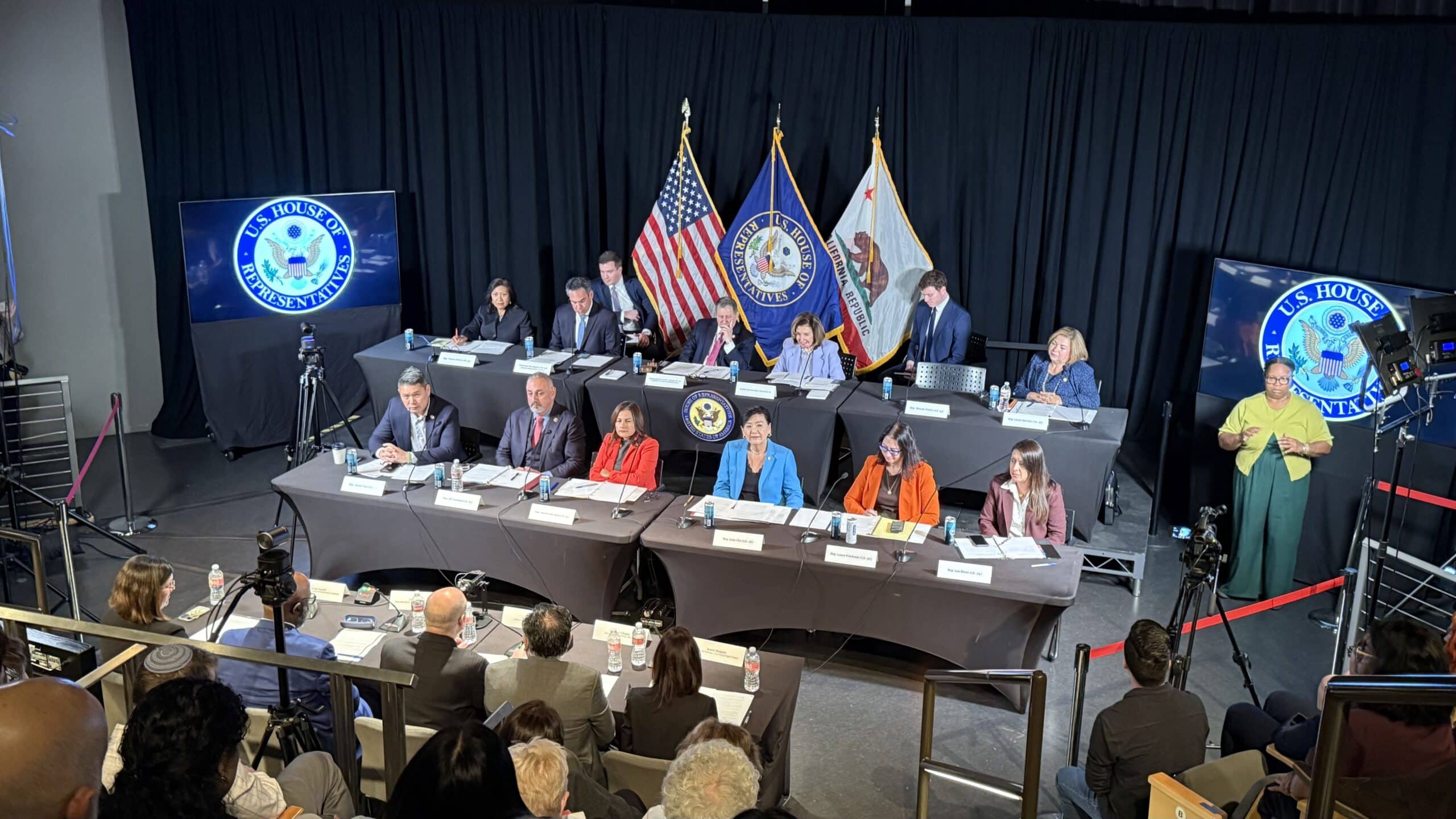
Shadow Hearing, April 7, 2025, Japanese American National Museum, Los Angeles
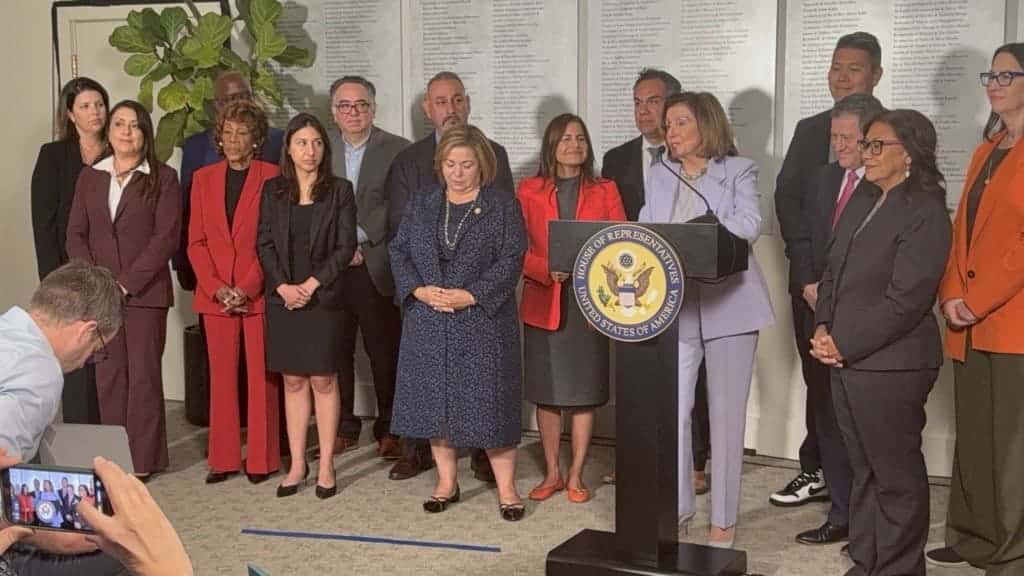
Post hearing press conference
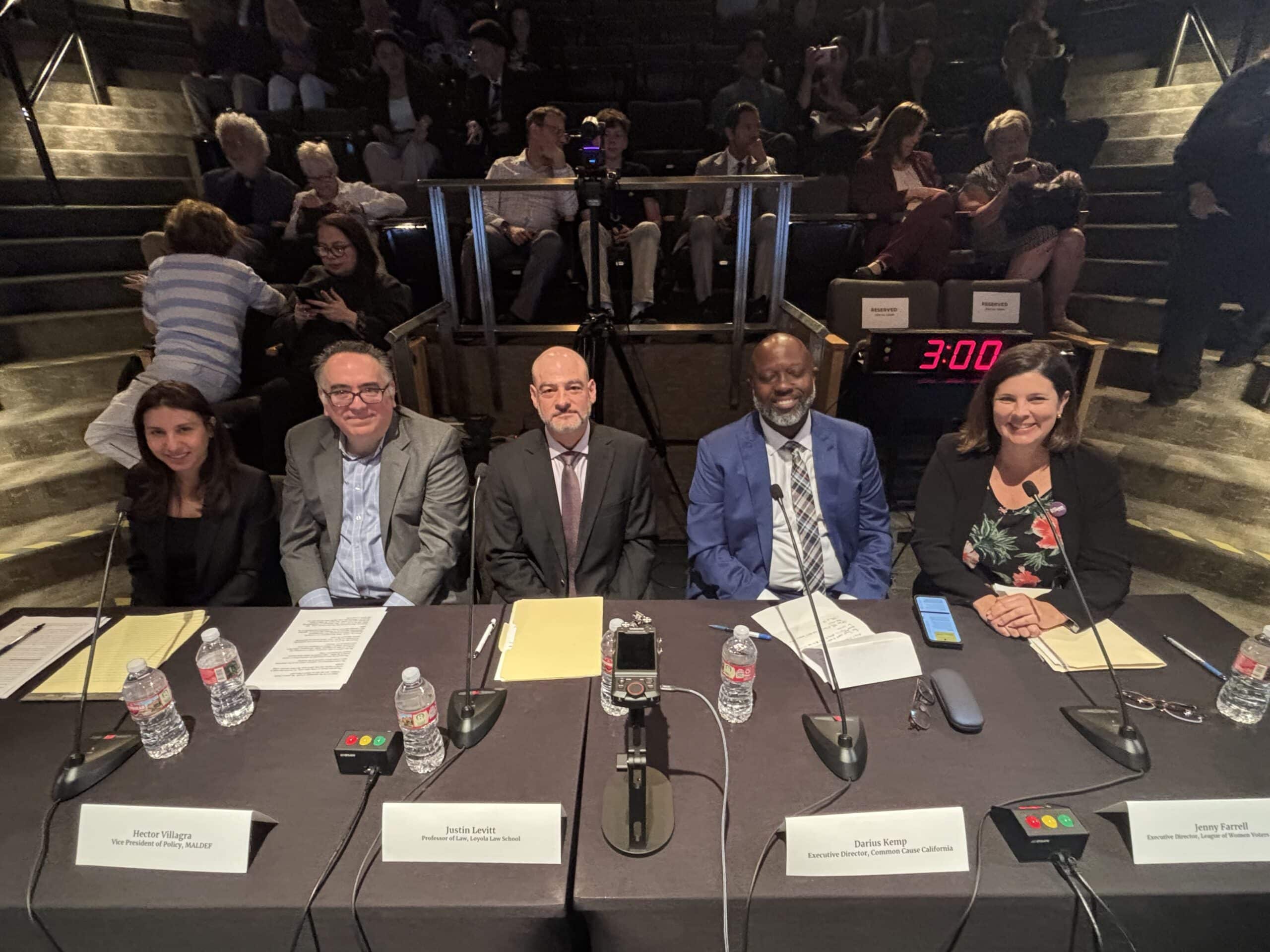
Expert witnesses from left to right: Sonni Waknin, UCLA Voting Rights Project; Hector Villagra, MALDEF; Justin Levitt, Loyola Law School; Darius Kemp, Common Cause California; Jenny Farrell, LWVC
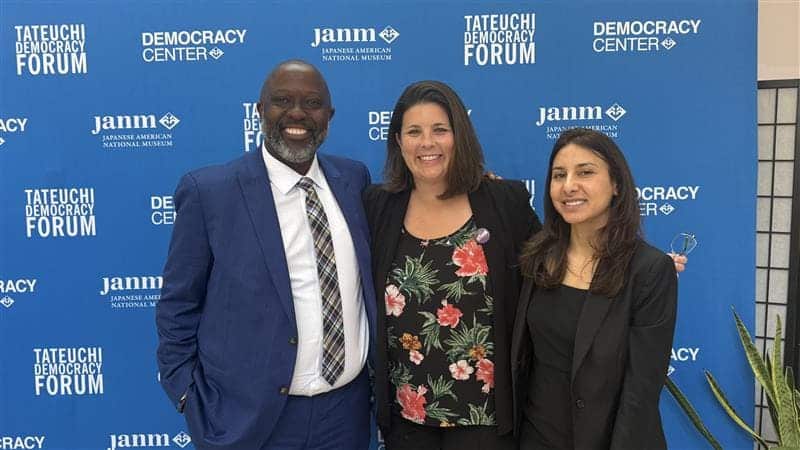
Left to right: Darius Kemp, Executive Director of Common Cause California; Jenny Farrell, LWVC Executive Director; and Sonni Waknin, Senior Staff Attorney of the UCLA Voting Rights Project
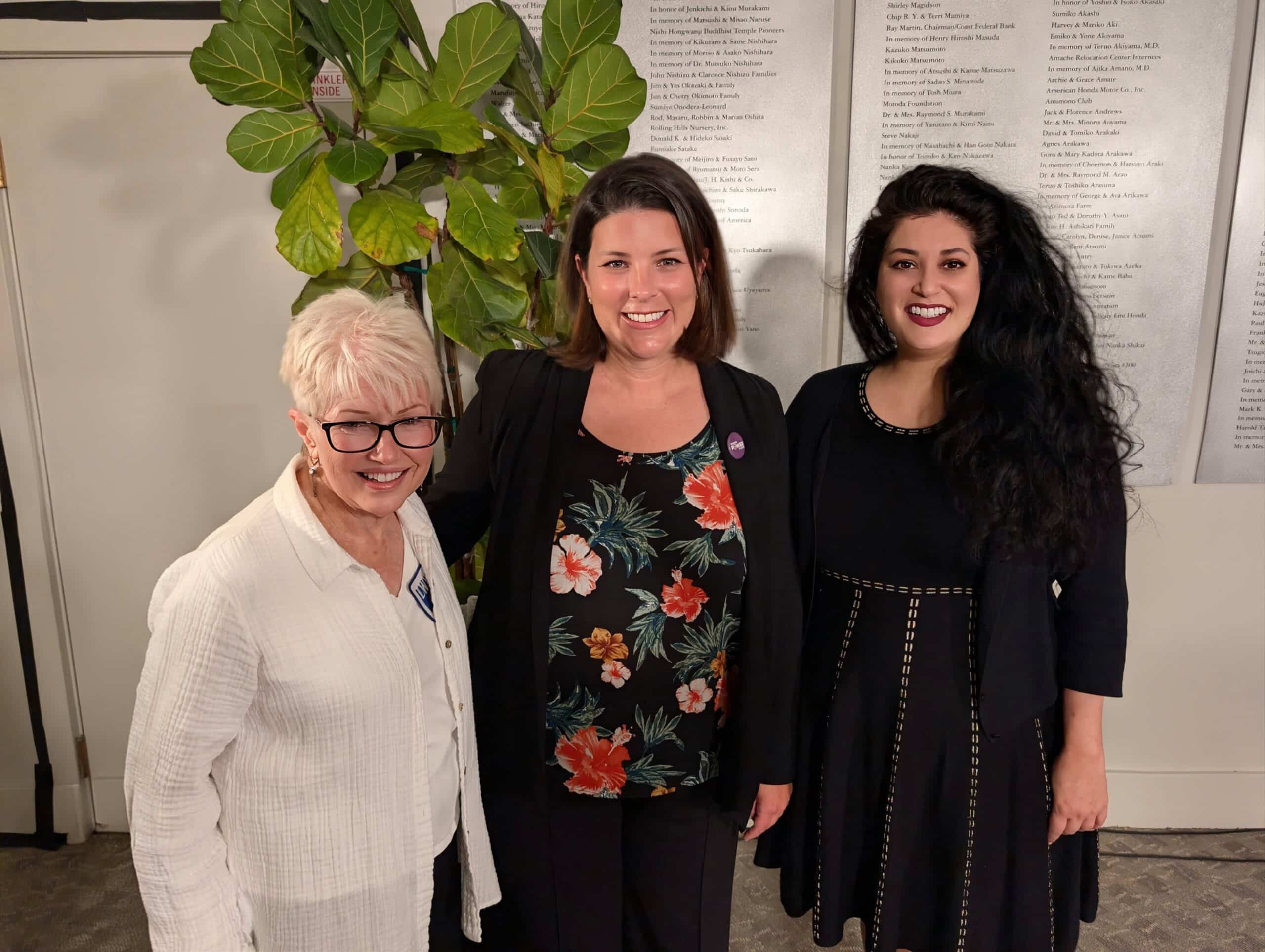
Penny Sommers, Co-President, LWV Greater Los Angeles; Jenny Farrell; and Fatima Malik, Vice President, LWV of Los Angeles County
Jenny Farrell’s Oral Testimony:
Chair, Members of Congress, thank you for the opportunity to speak today.
I am here on behalf of the League of Women Voters of California, an organization founded over a century ago to fight for the rights of women to vote and become full participants in our democracy. Since 1920, our mission has remained the same: to ensure that every eligible voter can participate fully, freely, and confidently in our elections.
That mission is as urgent today as it was then.
Across the country, we are seeing a troubling pattern: policies framed as “election integrity” that, in reality, narrow access to the ballot. Chief among these are voter ID laws and proposals like the federal SAVE Act – and now, a similar voter ID initiative likely headed to the California ballot this November.
These efforts are cut from the same cloth.
They disproportionately burden voters who already face barriers. Women who have changed their names due to marriage may find that their identification does not match voter rolls. Communities of color, voters with disabilities, seniors, and low-income voters are less likely to have the required documentation readily available. These are not hypothetical concerns – they are predictable outcomes.
And they are completely unnecessary.
Because the truth is: voter fraud is extraordinarily rare. And by extraordinarily, I mean you are more likely to be struck by lightning than you are to commit voter fraud in the United States. Yet we are being asked to restructure our entire democratic system around a problem that does not exist.
Meanwhile, we have real-world evidence of the harm these policies cause.
In Kansas, a proof-of-citizenship requirement enacted in 2013 blocked over 30,000 eligible voters from registering. In Texas, after new voter ID requirements for mail ballots were implemented in 2022, more than 24,000 ballots were rejected in a single primary, meaning that 1 in 8 voters who had always voted by mail suddenly had their ballots thrown out due to new technical errors.
These are cautionary tales. And we should heed them.
Here in California, we are working to move in the opposite direction – to expand access, not restrict it.
The California Voting Rights Act of 2026 would restore key protections that have been weakened at the federal level, including a state-level preclearance system for jurisdictions with histories of discrimination, expanded language access for voters, and stronger tools to challenge practices that dilute or suppress votes.
Protecting democracy today requires vigilance on every front – policy, education, and litigation.
But I want to be clear about something: California’s elections are strong. They are secure, accessible, and run by dedicated professionals who take their responsibility seriously. Our goal is not to fix a broken system – it is to protect a working one from unnecessary and harmful interference.
Thank you.